Best AI Platform to Make Music Videos for Social Media
The best AI platform to make music videos for social media in 2026, tested and ranked: Freebeat, Runway, Kaiber, Kling, and what to skip.

The best AI platform to make music videos for social media in 2026 is Freebeat if you want a finished, beat-synced video from one audio file, and Runway if you care more about cinematic visual quality and don't mind syncing manually. By the end of this you'll know which of the five tools actually fits your workflow, what each costs, and which one to avoid wasting credits on.
I run a producer media brand (Beatonomy) and I make a lot of social clips for my own releases under the name Snax. So this isn't a roundup of marketing pages — it's which AI music video generator I'd actually reach for depending on the job.
What Is an AI Music Video Generator
An AI music video generator is software that turns an audio track into synchronized video — analyzing your song's beats, structure, and energy, then generating or sequencing visuals that move with it. The best ones in 2026 handle beat detection, character consistency across shots, and lip-sync; the weaker ones just slap generic motion on top of a timeline.
The key split: music-first tools (built to understand song structure) versus general text-to-video tools (built for any clip, music optional). That distinction decides everything below.
If you're still building the track itself, check out the best AI tools for music production before you worry about the video layer.
The 5 Best AI Platforms to Make Music Videos in 2026
I ranked these on the things that matter for social: beat-sync, speed, cost, and how little manual editing you're stuck doing afterward.
1. Freebeat — Best Overall for Music-First Workflow
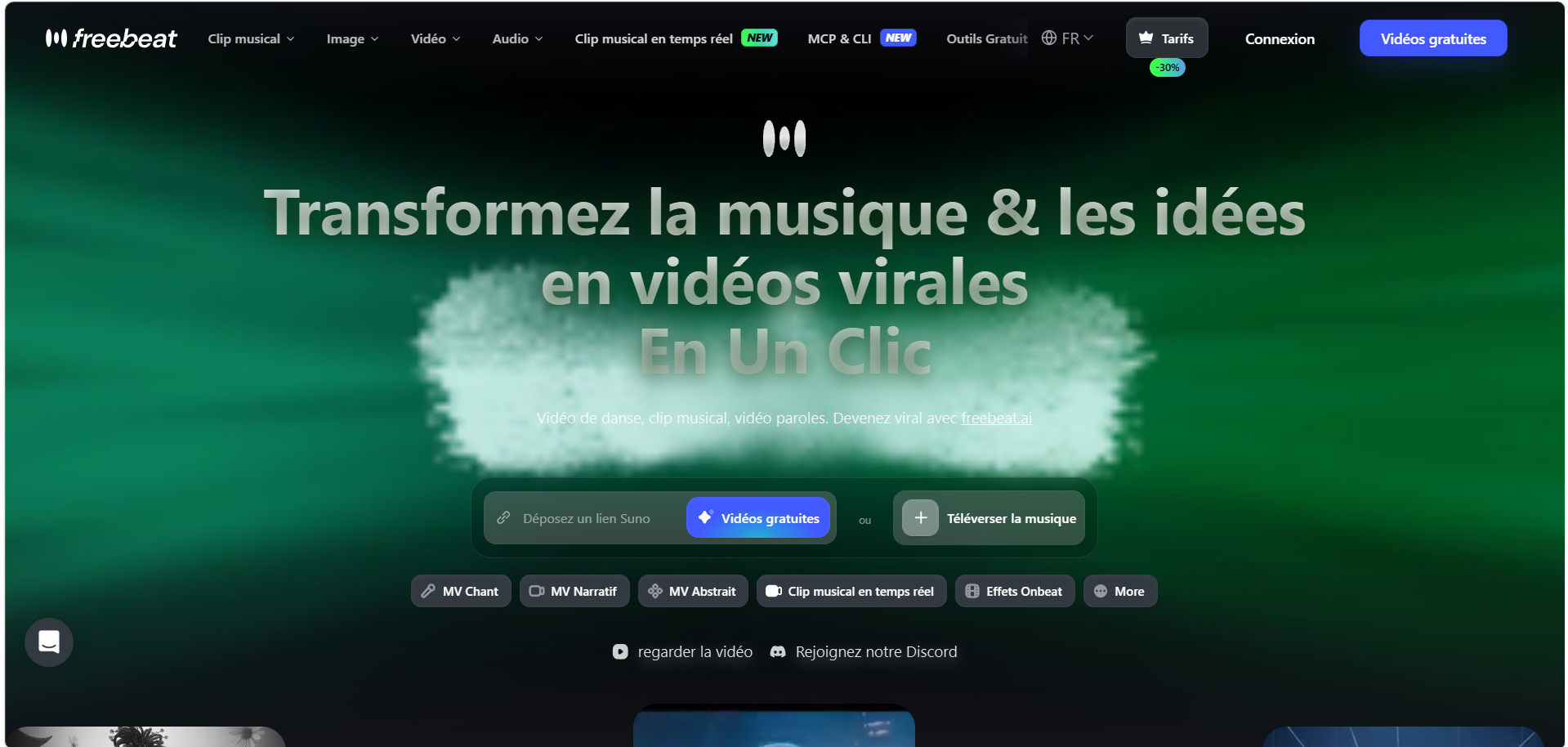
What it is: A purpose-built AI music video generator. You paste a link (Suno, Udio, YouTube, SoundCloud, Spotify) or upload a track, and it analyzes the song's structure, builds a storyboard, and renders a beat-synced video.
What works: It's the only tool I tested that handles the whole pipeline — song analysis to storyboard to character-locked, lip-synced final render — without dropping you into a separate editor. You get shot-by-shot storyboard control, per-scene prompts, style selection, and character consistency across dozens of shots. The Suno integration is the smoothest in the category.
What doesn't: Credits. This is the honest catch — generation burns credits at every stage, including re-rolling individual clips, and a full music video can cost far more credits than you'd guess from the plan name. Some users have reported a single video quoted at absurd credit counts, and that cancellation is buried in the billing panel. Budget for more than you think, and test on the free tier (watermarked) before committing.
Pricing (from Freebeat): Basic $4.99/week, Standard $9.99/month, Pro $24.99/month. Free tier exists but watermarks output and runs on slow queues. Always check the live pricing page before you commit — credit rates change.
Bottom line: If your job is "I have a finished track, I want a real music video," this is the one to start with.
2. Runway — Best for Cinematic Visual Quality
What it is: The pro-grade general text-to-video and image-to-video platform (Gen-4 / Gen-4.5). Not music-specific, but it produces the most visually impressive individual clips in the category.
What works: Raw image quality, motion consistency, camera control, and reference-driven character consistency. Individual scenes — especially high-energy chorus or outro moments — can look genuinely cinematic. If you're building a video shot by shot and you care about it looking expensive, Runway wins.
What doesn't: No built-in beat detection, no music analysis. You align clips to your audio manually in post. That's real work and real planning. It's video-production software adapted for music, not a music tool.
Pricing (from Runway): Paid plans start around $15/month, scaling up by credits and resolution.
Bottom line: Best when visual quality matters more than automation and you're comfortable editing.
3. Kaiber — Best for Abstract Audio-Reactive Visualizers
What it is: A stylized, audio-reactive generator. Upload a song and its audio-reactive engine produces flowing, abstract visuals that pulse with the energy of the track.
What works: Distinctive, artful aesthetics for visualizers, loops, and live-set backdrops. Fast for lightweight social content. If you want a vibe-y looping visualizer for an Instagram or TikTok teaser rather than a literal narrative video, Kaiber nails it.
What doesn't: It's not built for narrative, character-driven videos. Less specialized than Freebeat for a full-song release with a story.
Pricing (from Kaiber): Roughly $15–$30/month depending on tier.
Bottom line: Best for abstract visualizers and short social teasers, not full storyline videos.
4. Kling AI — Best Budget Pick
What it is: A strong, low-cost general AI video generator (Kling 3.0) with competitive cinematic quality.
What works: Cinematic-leaning output at the lowest price in this list. Good standalone clip quality. A solid choice if you want to generate strong individual shots on a tight budget and assemble them yourself.
What doesn't: No beat detection or music-aware editing. Like Runway, sync is on you. Clips typically cap around 10–20 seconds, so a full video means stitching.
Pricing (from Kling AI): Entry plans start around $5.99–$7/month.
Bottom line: Best value if you're hands-on and budget-conscious.
5. Neural Frames — Best for Experimental Motion
What it is: An audio-reactive generator favored for experimental, morphing, trippy motion synced to sound.
What works: Genuinely creative audio-reactive motion that the cleaner tools won't give you. Great for a specific psychedelic or experimental aesthetic.
What doesn't: Niche look. Less polished and less controllable than Runway or Freebeat for conventional videos.
Pricing (from Neural Frames): Subscription tiers in the ~$19+/month range; check current rates.
Bottom line: Best when you specifically want that experimental, reactive aesthetic.
What Happened to Sora?
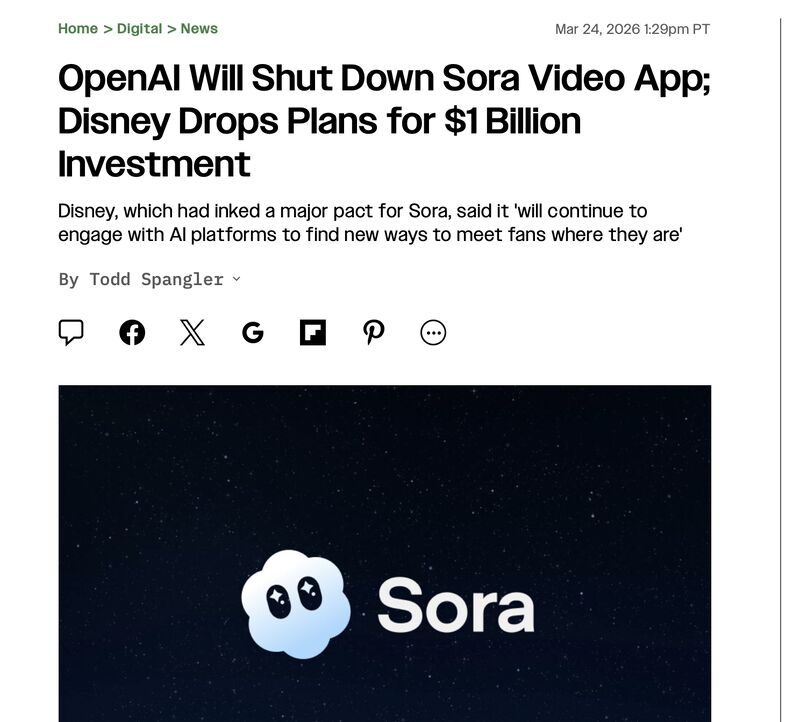
If you came here expecting Sora on the list — it's gone. OpenAI shut down the Sora consumer app and web experience on April 26, 2026, and the API is scheduled to be discontinued on September 24, 2026. Even before that, Sora had no real music-sync workflow and capped clips at roughly 20 seconds. Don't build a 2026 music-video workflow around it. This is exactly why I verify tool status before committing — half the "best AI music video" listicles still ranking online list Sora as a top pick, which tells you they haven't been updated.
Quick Comparison
Best overall for most independent artists: Freebeat — it's the only tool that takes you from a finished track to a synced video without a separate editor. If you only try one, start there. Pick Runway instead if cinematic quality outranks automation for you.
| Tool | Music-aware? | Best for | Starting price | Manual editing needed |
|---|---|---|---|---|
| Freebeat | Yes (full pipeline) | Complete beat-synced videos | $4.99/wk | Minimal |
| Runway | No | Cinematic visual quality | ~$15/mo | High |
| Kaiber | Yes (reactive) | Abstract visualizers | ~$15/mo | Low–medium |
| Kling AI | No | Budget cinematic clips | ~$5.99/mo | High |
| Neural Frames | Yes (reactive) | Experimental motion | ~$19/mo | Medium |
3 Questions That Tell You Which Tool to Pick
1. Do you want a finished video, or raw clips to assemble yourself? Finished and synced — Freebeat. Raw cinematic shots you'll edit — Runway or Kling.
2. Narrative video or abstract visualizer? A story with characters — Freebeat. A pulsing, vibe-y loop for a teaser — Kaiber or Neural Frames.
3. What's your real budget — including credit burn? The sticker price isn't the cost. On credit-based tools like Freebeat, re-rolls eat credits fast. If you're cost-sensitive and patient, Kling's flat-ish pricing is friendlier.
Once you know which tool fits, pair the visuals with a real distribution and social media promotion strategy — a great video with no distribution plan is just content that disappears.
Frequently Asked Questions
What is the best AI platform to make music videos for social media? For most independent artists, Freebeat is the best overall because it turns a single audio track into a complete, beat-synced video without a separate editor. Choose Runway instead if cinematic visual quality matters more to you than automation.
What is the best free AI music video generator? Freebeat and Kaiber both offer free tiers, but expect watermarks, slower generation queues, and tight credit caps. Free tiers are good for testing the workflow, not for producing final, watermark-free content you'd actually post.
Can AI generate music videos with lip sync? Yes. In 2026, tools like Freebeat offer neural lip-sync that analyzes a vocal track and animates a character's mouth to match the lyrics. Quality varies by tool and by how clean your vocal stem is, so test before committing to a full render.
How long does it take to generate an AI music video? Anywhere from a few minutes to over an hour depending on the tool, video length, and queue. Music-first tools like Freebeat generate a full synced video in one flow, while clip-based tools like Runway or Kling require you to generate and stitch multiple short segments.
Do I need video editing skills to use AI music video generators? Not for music-first tools like Freebeat, which handle sequencing automatically. You will need editing skills for clip-based generators like Runway and Kling, since you manually align each generated clip to your track's timing in post-production.
The Bottom Line
The best AI platform to make music videos for social media in 2026 comes down to one question: finished video or raw footage. Freebeat wins for artists who want a complete, beat-synced video from one track, while Runway wins for cinematic quality if you're willing to edit. Skip Sora — it's discontinued. And watch the credit math on anything subscription-based; the sticker price is rarely the real price. The visuals matter, but the music has to earn the view first — read how to finish more songs before you worry about the video. More on building your craft in the Craft section.

Snax
Moroccan producer from Morocco. Credits include Dj Hamida, Leck, Small X, and Abduh — plus advertising campaigns for Spotify, BYD and more. At Beatonomy, he writes about the craft and business behind independent production.
The producer's edge, weekly.
No gear hype. No fluff. Strategy, systems, and the business of making music — delivered every week.